Keurig K-Duo Gen 2 Hot & Iced Single Serve & Carafe Coffee Maker

Top Strength: Versatility · 4.6 / 5
Best For: You want the flexibility to switch between quick single K-Cups on weekdays and full carafes on weekends.
Key Drawback: A significant number of customer reviews highlight recurring durability issues, with units completely losing power within two to six months.
Key Factors
Best Fit
Technical Specifications
| Product Type | Coffee Maker |
|---|---|
| Brand | Keurig |
| Model Name | Keurig K-Duo Gen 2 |
| Model Number | 5000378536 |
| Technology | MultiStream Technology |
| Capacity | 4.5 Pounds / 72oz Reservoir |
| Weight | 16 ounces |
| Color | Black |
| Material | Glass, Matte Exterior Finish |
| Coffee Input Type | K-Cup Pods, Coffee Grounds |
| Filter Type | Reusable (#4 Size) |
| Wattage | 1100 watts |
| Power Source | AC adapter |
| Included Components | Carafe |
| Dishwasher Safe | No |
| Manufacturer | Keurig |
| ASIN | B0D8LXRHQ8 |
Expert Insights
- MultiStream Technology utilizes even saturation of grounds to extract full flavor and aroma, attempting to optimize flavor extraction whether brewing single cups or a full carafe.
- The Brew Over Ice function automatically adjusts the initial temperature during single-cup brewing to limit ice melt, maintaining flavor intensity for cold beverages.
- A shared 72oz reservoir serves both sides of the machine, which reduces refill frequency but means a single water level supports two completely different brewing methods.
The Verdict & Analysis
Advantages
- Dual functionality allows users to brew single cups with K-Cup pods or full carafes with grounds.
- Features an extra-large 72oz removable water reservoir shared by both brewing sides.
- Intuitive front-facing control panel with a clear digital readout simplifies preference selection.
- Programmable Carafe Auto Brew lets you schedule a full carafe up to 24 hours in advance.
- Pause and Pour feature pauses the carafe mid-brew for 20 seconds to allow dripless serving.
Constraints
- A significant number of customer reviews highlight recurring durability issues, with units completely losing power within two to six months.
- Mixed feedback regarding heat output, with multiple users reporting the coffee temperature is not hot enough.
- Some users note the hot plate under the carafe cannot be manually turned off after brewing.
- The carafe side has received complaints for producing weaker coffee when brewing full pots.
Who Is It For?
A Perfect Match If You…
- ✓You want the flexibility to switch between quick single K-Cups on weekdays and full carafes on weekends.
- ✓You enjoy making iced coffees or teas at home and want built-in temperature adjustment to limit ice melt.
- ✓You need a space-saving appliance that replaces two separate coffee makers in a compact kitchen layout.
Skip This If You…
- ×You expect steaming hot coffee, as mixed customer reviews report the temperature may feel lukewarm.
- ×You want a highly durable machine built to last for years without risk of early electronic failure.
- ×You require a smart home compatible appliance that connects to digital home networks.
Before You Buy
Technical Warnings & Limitations
- Power and Performance Limits: Numerous customer reviews cite early component failure where the machine completely refuses to power on or throws error codes after a few months. Regular cleaning and descaling are recommended by users to potentially extend usability.
- Temperature Restrictions: The heating plate under the glass carafe is designed to keep coffee warm rather than exceptionally hot, and users report that it cannot be turned off independently while the machine is running.
Quick Size Guide
Single Cup Side Sizes:
1. 6oz cup
2. 8oz cup
3. 10oz cup
4. 12oz cup
Glass Carafe Side Sizes:
1. 6-cup carafe
2. 8-cup carafe
3. 10-cup carafe
4. 12-cup carafe
Good to Know
Brewing Features:
1. Shared 72oz water reservoir means fewer refills for both brewing modes.
2. Front-facing digital control panel manages both grounds and pod choices.
3. Programmable carafe auto-brew allows setting up to 24 hours in advance.
4. Pause and Pour stops mid-brew for 20 seconds to let you pour a quick cup.
5. Reusable basket filter accepts standard number 4 coffee filters.
FAQ
FAQ
In-Depth Component Analysis
The Keurig K-Duo Gen 2 combines single-serve pod brewing and full carafe coffee grounds versatility into a single space-saving appliance. Featuring updated MultiStream Technology and specialized ice settings, it addresses diverse home brewing needs, though long-term reliability remains a consideration for buyers.
Takeaways
- Dual-brewing functionality allows users to seamlessly switch between single K-Cup pods and full 12-cup glass carafes using custom grounds.
- Integrated MultiStream Technology evenly saturates coffee grounds to extract full flavor and aroma for both hot and iced beverages.
- Features an extra-large 72-ounce water reservoir shared by both sides, minimizing the frequency of refills during daily operation.
- Includes convenient operational features like a 24-hour programmable Auto Brew, a front-facing digital control panel, and a 20-second Pause and Pour function.
- Some users note mixed results regarding consistency in brewing temperature and emphasize the importance of regular descaling maintenance.
Keurig K-Duo Gen 2: Single-Cup Convenience and a Full Carafe in One Machine
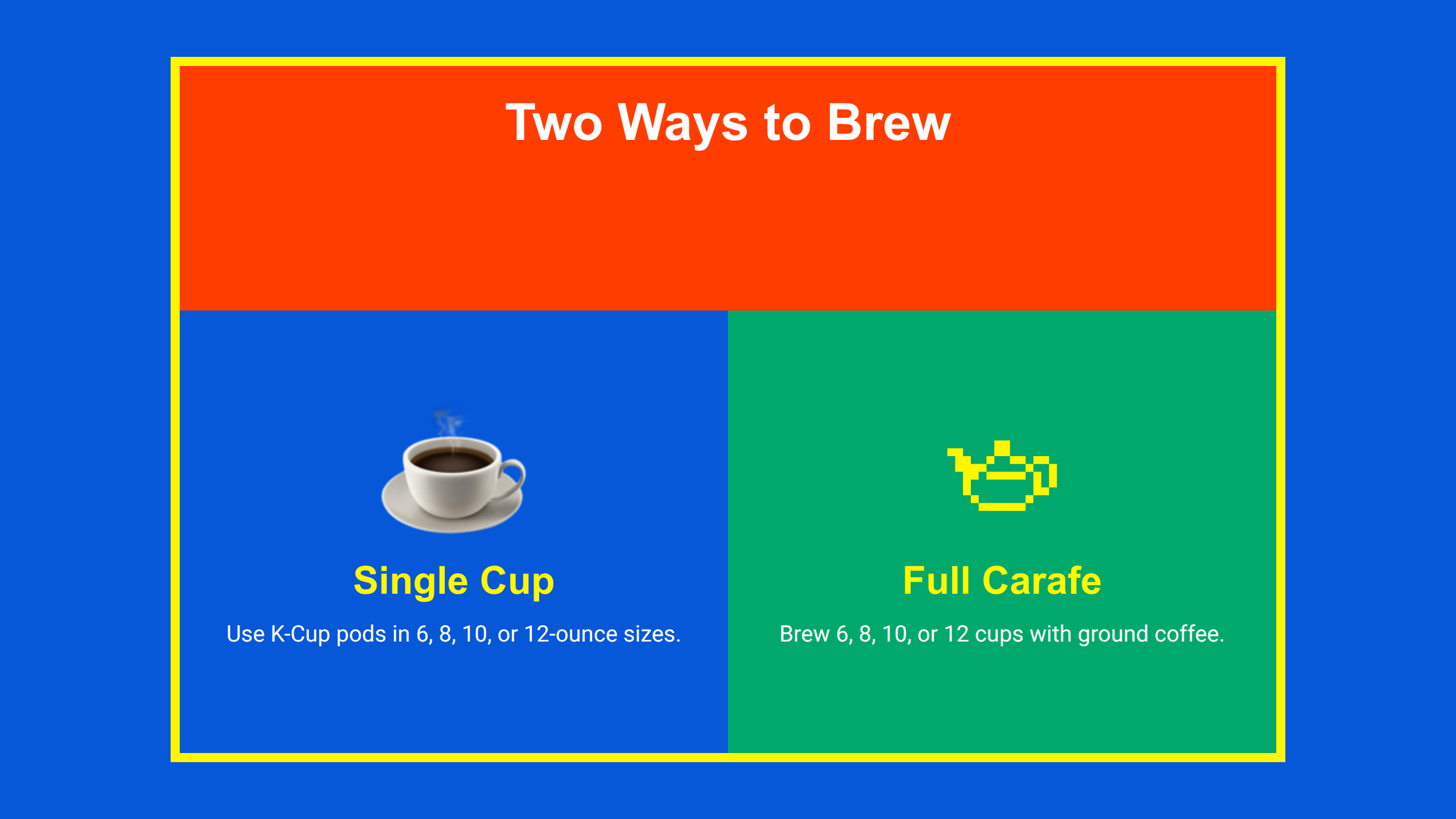
The Keurig K-Duo Gen 2 combines a K-Cup pod brewer and a traditional ground-coffee carafe brewer in one countertop machine. The two brewing formats matter more than they first appear to. A single person can make a 6-, 8-, 10-, or 12-ounce pod-based drink without brewing a pot, while a family, office, or group of guests can use coffee grounds to prepare a 6-, 8-, 10-, or 12-cup carafe.
I like the dual-brewer concept most in kitchens where coffee habits change throughout the day. A quick K-Cup before leaving for work requires very little preparation. Weekend breakfast, houseguests, or several coffee drinkers can justify a full carafe. There is no need to keep a separate pod machine and drip coffee maker on the counter.
The machine measures approximately 12.9 inches deep, 11.1 inches wide, and 12.7 inches high. Those dimensions give it a relatively narrow footprint for a brewer containing two coffee-making systems. Depth still deserves attention on shallow countertops, and vertical clearance matters if the machine will sit beneath low cabinets, especially because the removable water reservoir needs to be accessed for refilling and cleaning.
The exterior uses a black matte finish, while the included 12-cup carafe is glass. A glass carafe lets you see the remaining coffee immediately and works with the machine's heating plate. The tradeoff is familiar to anyone who has owned a glass-carafe brewer: the carafe requires more careful handling than a thermal stainless steel pot, and the listed product care information says the machine is not dishwasher safe.
What MultiStream Technology Actually Does

MultiStream Technology is Keurig's method of distributing water across the coffee more evenly instead of concentrating the brewing water through a narrower flow path. Coffee extraction depends heavily on water contacting the coffee material. Uneven saturation can leave some areas under-extracted while other areas receive more water exposure.
The practical goal is fuller extraction of flavor and aroma from a K-Cup pod. A pod contains a relatively small, fixed quantity of coffee, so water distribution becomes especially important. You cannot compensate by stirring the coffee bed during brewing as you might during some manual brewing methods.
MultiStream does not magically turn every K-Cup into specialty café coffee. Pod freshness, roast level, coffee quantity, and the selected beverage size still affect the result. A 12-ounce brew pushes more water through the pod than a 6-ounce brew, so the larger serving can taste lighter. For a more concentrated cup, I would start with a smaller brew size or use the Strong setting before blaming the brewer.
The same core idea of controlled saturation supports hot and cold drink preparation. The machine is designed to manage brewing rather than simply dispense hot water into a cup. That distinction becomes more noticeable with the dedicated Brew Over Ice mode.
Brew Over Ice Is Designed Around Ice Melt
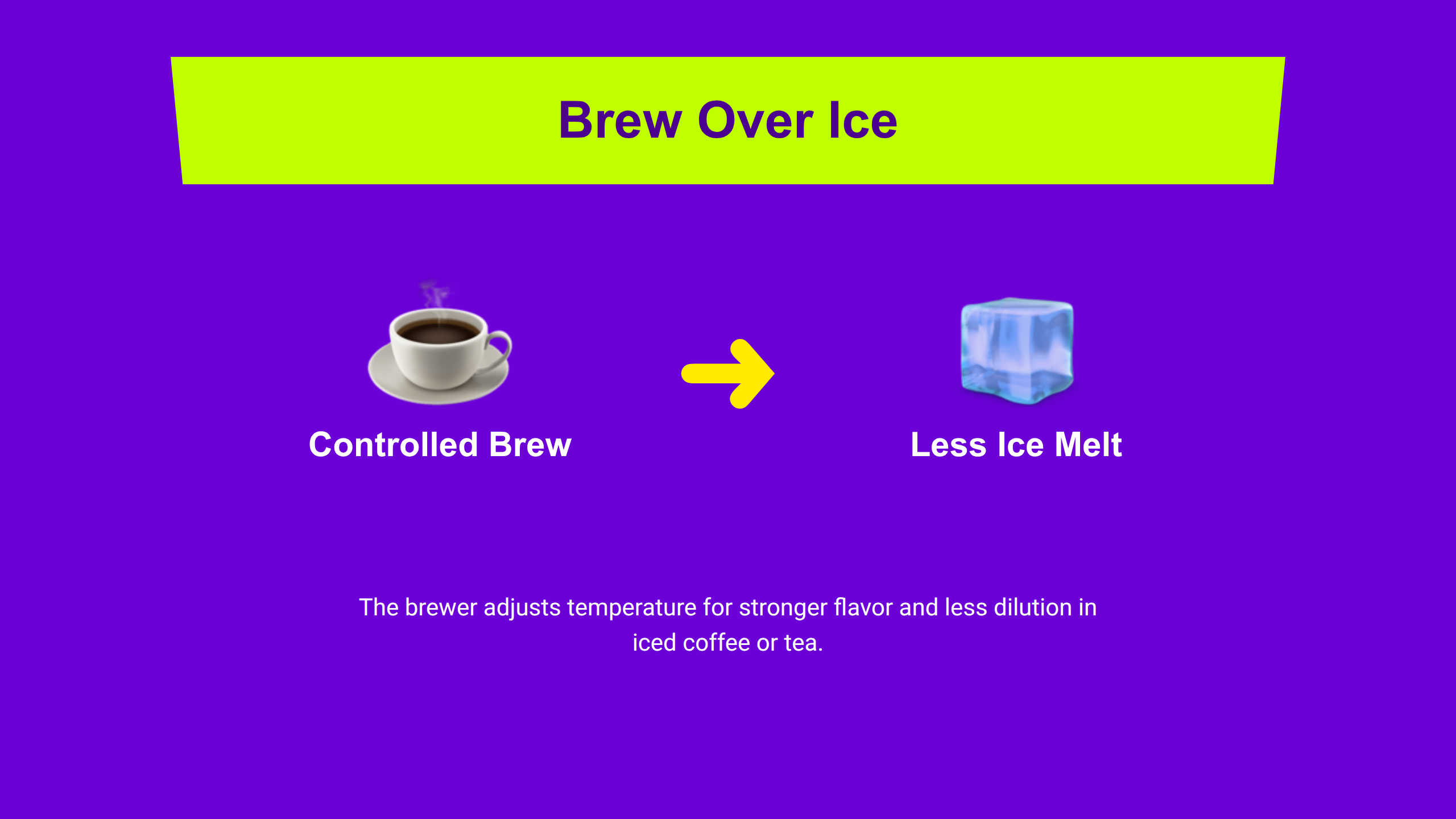
Brew Over Ice is a single-cup brewing mode that adjusts the brewing temperature profile for coffee or tea intended to be dispensed directly over ice. Ordinary hot coffee poured onto a full glass of ice can melt a large amount of that ice immediately. The melted ice adds water, and the drink can become noticeably diluted before the first sip.
The K-Duo adjusts temperature during the Brew Over Ice process to preserve more flavor while reducing excessive ice melt. You still need ice in the cup, and some melting is unavoidable because a hot brewed beverage is meeting frozen water. The feature is about controlling dilution, not producing refrigerator-cold coffee directly from the brewer.
For daily iced coffee, the workflow is straightforward: prepare an ice-filled cup that fits the single-serve side, select the appropriate mode, and brew over the ice. The machine handles the brewing adjustment instead of requiring you to manually experiment with hot-brew temperatures.
Drink strength still depends on the pod and final liquid volume. Adding milk, creamer, syrup, or more ice after brewing further changes concentration. A bold or dark-roast pod generally has more flavor headroom for an iced drink with milk than a delicate light-roast pod.
Strong Brew and Extra Hot Solve Two Different Problems
Strong Brew targets flavor intensity. It is intended to produce a bolder, more intense-tasting single cup. Coffee drinkers who find a standard pod brew too light are the obvious audience for the setting.
Strong does not mean the machine physically adds more coffee to a K-Cup. The coffee quantity inside the pod remains fixed. The brewer changes the brewing process to emphasize extraction and perceived intensity. Pod choice and cup size therefore remain important. A strong setting cannot fully compensate for a mild pod brewed into a very large serving if the goal is a concentrated coffee flavor.
Extra Hot targets serving temperature rather than strength. A hotter cup can be useful for people who add cold milk or refrigerated creamer because those ingredients immediately pull down the beverage temperature. It also suits slow coffee drinkers who want a hotter starting point.
The distinction between Strong and Extra Hot is worth keeping clear. Strong is the flavor-oriented control; Extra Hot is the temperature-oriented control. Selecting a hotter brew does not automatically make the coffee taste stronger in the extraction sense, even though temperature can influence how aroma and flavor are perceived while drinking.
Customer experiences with temperature are notably mixed. Some owners describe properly hot coffee and specifically appreciate the Extra Hot button, while others say the carafe coffee or heating plate does not maintain the temperature they expect. Temperature preference is unusually personal, so anyone who wants near-scalding coffee should pay close attention to that limitation rather than assuming the words "Extra Hot" guarantee a universally satisfying temperature.
Four Single-Serve Sizes Give You Control Over Concentration and Volume
The single-cup side brews 6, 8, 10, or 12 ounces. Those settings are not merely different cup-filling options. They also change the coffee-to-water relationship when the same K-Cup pod is used.
A 6-ounce selection generally gives the pod less water to flavor and is the logical starting point for a more concentrated drink. Eight ounces is a practical everyday size for many standard pods. Ten and 12 ounces provide more beverage volume but can taste lighter, particularly with mild coffee.
People often judge a pod brewer as producing "weak coffee" while always selecting the largest serving. The pod still contains its fixed coffee dose. More water passing through that dose changes the final concentration. Strong Brew can help, but choosing a smaller volume is also a direct way to adjust the result.
The ability to move among four sizes is useful in a household with different preferences. A small, intense morning cup and a 12-ounce travel-mug serving do not require different machines. Cup choice still matters because the product information specifically notes that a drinking cup is not included.
The Carafe Side Brews 6, 8, 10, or 12 Cups
The ground-coffee side offers 6-, 8-, 10-, and 12-cup carafe settings. A coffee maker "cup" is a brewer measurement and should not automatically be treated as a 12-ounce American mug. The 12-cup designation describes the brewer and carafe capacity convention rather than promising twelve large travel mugs.
Ground coffee gives you considerably more control over flavor than a sealed pod. Grind size, roast, freshness, and the quantity of coffee placed in the filter all influence the carafe. Complaints about weak carafe coffee need to be considered alongside coffee dose and grind because a dual brewer cannot correct an excessively low grounds-to-water ratio.
The listed filter size is #4, and the product information identifies the filter type as reusable. The coffee input specification covers both K-Cup pods and coffee grounds. For carafe brewing, grounds belong on the drip-brewer side rather than being treated like loose material for the pod holder.
The redesigned 12-cup glass carafe is intended to limit dripping while pouring. That is a useful detail because carafe spouts can leave coffee on the counter when the flow separates from the lip. Owner feedback still includes reports of leaking or dripping when the carafe is poured in certain ways, so I would pour at a controlled angle rather than expecting the spout design to eliminate every possible drip.
One 72-Ounce Reservoir Feeds Both Brewing Sides
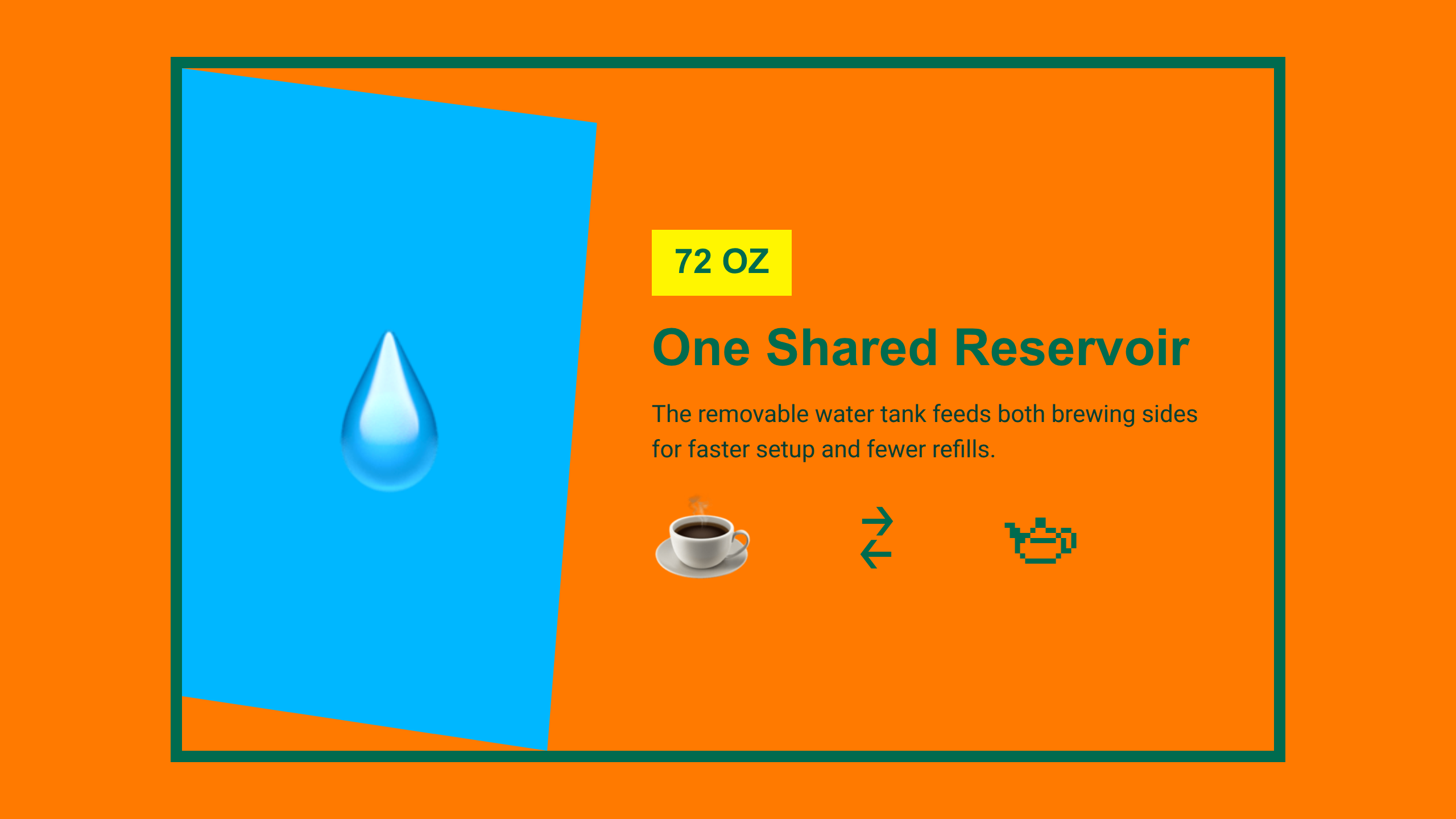
The 72-ounce removable reservoir is a shared water supply for both the single-serve and carafe brewing systems. You do not fill one tank for pods and another tank for the drip brewer. Both sides draw from the same reservoir.
A shared tank reduces one of the common annoyances of dual coffee makers: maintaining separate water compartments. The 72-ounce capacity also means fewer refills during repeated single-cup brewing. For perspective, several small pod servings can be prepared from a full reservoir, although actual available brew count depends on selected sizes and the water consumed by the machine's operating cycle.
Carafe brewing naturally uses a larger amount of water. A full or near-full pot can substantially reduce the reservoir level, so the large tank should not be interpreted as a promise that it will run for days without attention in a heavy-use household.
The reservoir is removable. Carrying the tank to a sink is generally easier than repeatedly pouring water into a fixed opening with a separate pitcher. It also gives better physical access during routine cleaning.
I consider the shared 72-ounce reservoir one of the K-Duo's strongest daily-use features. Dual brewing sounds impressive on a feature list, but a poorly designed water system can make a combination machine irritating. One removable tank keeps the basic workflow much simpler.
The Front-Facing Controls Keep Brewing Choices Visible
The K-Duo Gen 2 uses buttons and a front-facing control panel with a digital readout. Brewing preferences can be selected from the front instead of requiring controls hidden on the top surface.
Front controls are especially useful beneath kitchen cabinets. Top-mounted controls can become awkward when a coffee maker is pushed toward the backsplash. The K-Duo's interface keeps the primary selections facing the person using the machine.
The machine is described as fully automatic in its operating specification, but "fully automatic" should be understood in the context of a household coffee maker. You still add grounds for carafe brewing, insert K-Cup pods for single servings, maintain the reservoir, empty used coffee material, and clean the brewer. Automation covers the controlled brewing process and programmable functions rather than eliminating preparation and maintenance.
Most customer feedback about usability is positive. The machine is frequently described as easy to set up and operate. Auto Brew programming receives some criticism for being less immediately obvious, with owners reporting that it becomes easier after using the sequence a few times.
Programmable Auto Brew Can Prepare a Carafe Up to 24 Hours Ahead
Auto Brew lets you schedule the carafe side to start brewing at a selected time up to 24 hours in advance. The feature is for the full-pot workflow rather than a scheduled K-Cup drink.
The practical use is morning coffee. Prepare the brewer with the required water and coffee grounds, program the brew time, and the machine can start the carafe automatically. The preparation step remains essential. Auto Brew cannot load coffee grounds or place the carafe for you.
A 24-hour programming window suits daily scheduling without turning the brewer into a connected smart-home appliance. The product is specifically listed as not smart-home compatible. There is no stated Alexa, app, or Wi-Fi control. Scheduling is handled directly on the coffee maker.
For some buyers, the absence of smart connectivity is a benefit. There is no account setup or wireless pairing involved in making coffee. Buyers specifically wanting remote start, app notifications, or integration with a home automation platform should look elsewhere because those capabilities are not part of the listed feature set.
Pause & Pour Gives You a 20-Second Window
Pause & Pour automatically interrupts carafe brewing for 20 seconds so the carafe can be removed and coffee poured before the full brewing cycle finishes. The feature is designed for the person who wants the first cup immediately.
The 20-second limit matters. It is a temporary pause, not a manual stop command. The carafe should be returned to its brewing position promptly so coffee can continue flowing into the pot rather than meeting a missing carafe after the pause expires.
Removing a carafe during active brewing on a machine without an effective pause mechanism can create a hot, messy drip area. The timed pause provides a defined interruption window. I would still treat the 20 seconds as a short pour-and-return operation, not time to carry the carafe into another room.
The Heating Plate Keeps the Glass Carafe Warm
The carafe side includes a heating plate intended to maintain coffee temperature after brewing. A glass carafe loses heat more readily than an insulated thermal carafe, so the hot plate is part of the system rather than a minor accessory.
Owner feedback on heat retention is divided. Some users say the coffee stays hot, while others describe the plate as keeping coffee warm rather than genuinely hot. There are also complaints about not being able to turn the hot plate off as conveniently as some users expect after the remaining coffee has been consumed.
Extended time on a heating plate can also change coffee flavor. Continuous heat encourages evaporation and can make older coffee taste harsher or more cooked. Anyone who routinely keeps a pot for several hours may prefer transferring coffee to an insulated vessel instead of relying entirely on prolonged plate heating.
Fast Brewing Is a Consistent Strength in Owner Feedback
Brewing speed receives strongly positive feedback. Customers repeatedly describe the machine as quick to heat and fast to brew, and the review-topic breakdown shows substantially more positive than negative mentions of brewing speed.
Speed is particularly relevant on a dual machine because the single-serve side is often purchased specifically for immediate coffee. Waiting through a traditional full-pot cycle would defeat much of the reason for having K-Cup compatibility.
Several owners also describe the brewer as relatively quiet compared with previous dual coffee makers. Noise perception depends on the machine being replaced and the kitchen environment, but fast operation and a less disruptive brewing cycle are useful characteristics for early mornings.
1100 Watts and Standard AC Power
The listed electrical rating is 1100 watts, and the power source is AC. An 1100-watt coffee maker is a meaningful electrical load because heating water quickly requires substantial power.
In normal household use, the machine should be placed on an appropriate electrical circuit and used according to the manufacturer's electrical instructions. High-draw kitchen appliances are poor candidates for questionable extension cords or overloaded power arrangements.
The 1100-watt rating also helps explain the brewer's emphasis on heating and speed. Electrical heating elements convert power into heat for the brewing water and carafe system. Actual energy consumption over a day depends on brewing frequency and heating-plate use rather than simply multiplying 1100 watts by 24 hours; the wattage rating describes operating power requirements, not continuous full-power consumption all day.
Compact for a Dual Brewer, but Measure the Counter First
At 11.1 inches wide, the K-Duo packs two brewing formats into a footprint narrower than placing many separate drip and pod brewers side by side. The 12.9-inch depth and 12.7-inch height keep the basic body reasonably compact for the feature set.
"Compact" remains relative. The machine still needs practical working clearance for the reservoir, carafe, pod area, and routine cleaning. A measurement of the intended countertop location is more useful than relying on the compact-design label.
The black matte exterior has a neutral appliance look that fits many kitchens and office break areas. Matte surfaces can hide some reflections better than glossy plastic, although coffee splashes, mineral residue, and dust still require wiping.
K-Cup Pods and Coffee Grounds Serve Different Daily Needs
K-Cup compatibility prioritizes speed, portion control, and variety. Different people can brew different roasts or flavored drinks without emptying a shared carafe. The compatible pod specification specifically identifies K-Cup pods.
Coffee grounds prioritize control and volume. You can choose the coffee, adjust the amount used, and prepare enough for several people. The carafe side is the more economical workflow in many high-volume situations, depending on the coffee and pod prices being compared.
The K-Duo does not include a built-in grinder. Whole-bean users need a separate grinder before placing coffee grounds in the carafe filter. It is also not an espresso machine in the practical café sense, despite an inconsistent product-information field labeling the coffee maker type as "Espresso Machine." The actual described brewing systems are K-Cup single serve and drip-style carafe brewing; there is no stated high-pressure espresso extraction system or espresso portafilter.
That specification inconsistency is worth calling out because espresso has a specific brewing meaning. Buyers looking for traditional espresso, cappuccino preparation with steamed milk, or a pressure-based espresso shot should not treat the K-Duo as a substitute for an espresso machine.
Cleaning and Routine Care Matter More Than the Convenience Features
The product is listed as not dishwasher safe. Removable components should be handled according to the manufacturer's cleaning instructions rather than automatically being placed in a dishwasher.
Coffee oils accumulate around brewing components, while minerals from water can form scale inside the water-heating system. Scale is particularly relevant in areas with hard water. Regular cleaning and descaling are basic maintenance requirements for consistent flow and heating performance.
The removable reservoir improves physical access, but removable does not mean maintenance-free. Water should not be allowed to become a long-term stagnant supply. The carafe, coffee-contact components, and accessible brewing areas also need routine cleaning.
Reliability complaints make maintenance especially important, although cleaning cannot be assumed to prevent every electrical or mechanical failure. Some customer reports describe machines losing power completely or stopping operation after a few months. Those failures are different from a slow brewer caused by mineral buildup.
Reliability and Durability Are the Main Warnings
The 4.2-out-of-5-star rating comes from more than 6,000 ratings, with 70% of the rating distribution at five stars. The overall score shows that many owners are satisfied, but the negative review pattern should not be ignored.
Reliability is one of the most frequently discussed issues. In the review-topic summary, negative reliability mentions substantially outnumber positive ones. Reports include machines stopping, failing to turn on, producing errors, or quitting after several months.
Durability feedback is even more concerning. The review summary identifies durability as a major negative topic, with multiple owners reporting failures within months or before one year. Individual customer reviews cannot establish a universal failure rate, and online review populations are not controlled reliability studies. Repeated reports of similar power and early-failure problems are still a legitimate purchasing consideration.
I would keep the receipt, register the product if the manufacturer provides registration, and read the current warranty terms immediately after purchase. Waiting until a failure occurs to find out what documentation is required creates unnecessary frustration.
The available purchase information also shows optional third-party protection plans, including three- and four-year plans. Those plans have separate eligibility, coverage, claim, and exclusion terms. A protection plan should be evaluated as a separate contract rather than treated as an extension automatically provided by Keurig.
Coffee Strength and Temperature Have Mixed Feedback
Coffee quality receives more positive than negative mentions, but weak carafe coffee appears repeatedly in dissatisfied feedback. Ground-coffee dosage is an important variable here. A 12-cup water setting paired with too little coffee will predictably produce a thin pot regardless of the brewer brand.
Pod coffee has a different limitation because the dose is sealed inside the K-Cup. Selecting 10 or 12 ounces from a mild pod can create a lighter drink. Strong Brew and a smaller serving size are the first controls to try for greater intensity.
Temperature feedback is almost evenly divided between positive and negative mentions. Some customers specifically praise hot coffee and the Extra Hot function. Others report coffee that is not hot enough or a warming plate that maintains only moderate warmth.
Anyone highly sensitive to beverage temperature should treat the mixed feedback as a meaningful caution. The Extra Hot function applies to a hotter single cup; it should not be confused with an adjustable carafe hot-plate thermostat or a promise that every carafe serving will remain at a preferred temperature indefinitely.
Who the Keurig K-Duo Gen 2 Fits and Who Should Skip It
The K-Duo Gen 2 fits households that genuinely use both single servings and full pots. Couples with different coffee schedules, families that brew a carafe on weekends, home offices, and people who entertain guests can take advantage of both brewing sides. The 72-ounce shared reservoir, four pod sizes, four carafe sizes, Brew Over Ice, Strong Brew, Extra Hot single-cup option, Auto Brew, and 20-second Pause & Pour give the machine useful flexibility without requiring an app.
It is less suitable for espresso drinkers, smart-home users, or buyers who want a built-in grinder. Coffee enthusiasts who demand precise manual control over water temperature, flow rate, and extraction variables will also find the push-button system restrictive. A thermal-carafe brewer may be a better match for anyone who needs coffee to stay hot for hours without a heating plate.
The biggest purchasing concern is durability. Fast brewing and easy operation receive substantial praise, but repeated reports of early power and reliability failures are too consistent to dismiss. The mixed temperature feedback also matters for people who insist on exceptionally hot carafe coffee.
At a deal price around $149.99 in the listed purchase information, the value comes from replacing two brewing formats with one machine. Paying for the K-Duo makes less sense if you only use K-Cups or only brew full pots because a dedicated brewer can perform that single role with less complexity.
I would choose it for a kitchen where the brewing format changes constantly and counter space is more valuable than owning two separate machines. I would be more cautious if long-term durability is the absolute top priority, especially given the concentration of owner complaints about units failing within months.
Click the first link to see the current ordering details, available price, seller information, warranty information, and any newer product changes before buying.
- MultiStream Technology: A brewing system that utilizes multiple needles to saturate coffee grounds evenly, maximizing flavor and aroma extraction.
- Brew Over Ice: An automated setting that adjusts the brewing temperature to maximize flavor extraction while minimizing ice melt for cold beverages.
- Strong Brew: A control panel setting that slows down the water flow to deliver a bolder, more intense coffee flavor.
- Pause and Pour: A feature that automatically stops the drip flow for 20 seconds mid-brew so you can pour a cup before the full carafe finishes.
- Programmable Auto Brew: An interface option that allows users to schedule a full carafe to brew automatically up to 24 hours in advance.